


+86-13826948503 (Bella)
+86-18145725878 (Carven)


A display may look simple, but inside it must move large amounts of data fast and cleanly. This is where an LVDS cable becomes useful. In this article, you will learn what LVDS is used for, why engineers choose it, and how the right cable supports stable signal transmission.
LVDS stands for Low-Voltage Differential Signaling. It sends data as two opposite signals, then the receiver reads the difference. This method helps reduce noise, lower EMI, and support compact electronic designs.
● LVDS is mainly used for high-speed digital signal transmission in displays, cameras, vehicles, medical devices, communication equipment, and embedded systems.
● An LVDS cable carries differential signals through paired conductors, helping the system reduce noise and keep image or data output stable.
● It is common in LCD displays because it can move video data between a mainboard, screen controller, and display panel in a compact space.
● Good LVDS wiring depends on impedance control, shielding, connector fit, cable length, and proper routing.
● Custom LVDS cable assemblies are often needed when a device has special space, signal, or connector requirements.
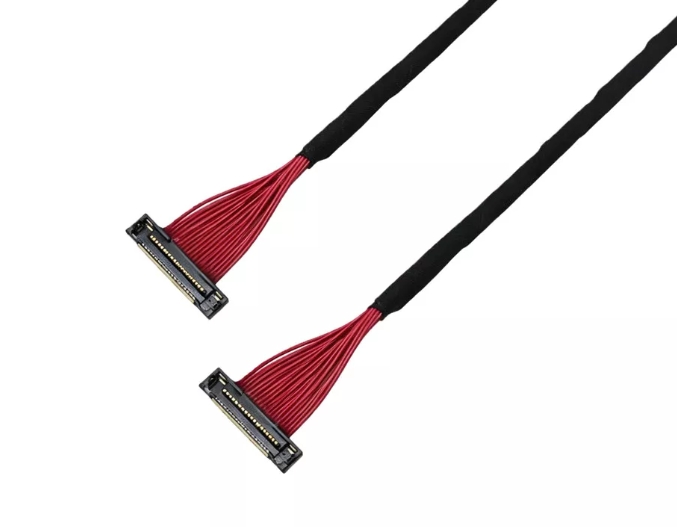
An LVDS cable for LCD display is one of the most common uses. It sends image data from a mainboard, graphics board, or timing controller to an LCD panel. You can find this LVDS display connection in laptops, all-in-one computers, industrial monitors, digital signage, portable screens, and embedded display modules. It helps the screen receive clean video data, so images stay stable and clear.
Automotive electronics use LVDS for dashboards, infotainment screens, rear-seat displays, and camera-related display links. A vehicle has motors, sensors, power lines, and many noise sources. An LVDS cable for automotive display helps move visual data while resisting interference inside a crowded vehicle structure.
An LVDS cable for industrial camera use supports fast image transfer in inspection, robotics, and machine vision systems. These cameras must send data quickly to a processor. If the signal is weak or noisy, the system may lose detail or create image errors. LVDS helps protect the signal in factories where motors and drives may create interference.
Medical equipment uses LVDS in imaging displays, diagnostic devices, endoscopy systems, and compact medical screens. Clean data matters in these products. Communication equipment and embedded boards may also use an LVDS interface for board-to-board or module-to-module data links where timing and signal quality are important.
Aerospace and defense electronics may use LVDS where systems need low power, lower emissions, and reliable transfer in difficult environments. Embedded systems also use LVDS for internal computer connections, screen controllers, and compact boards. In these cases, the cable often needs a custom length, tight routing, and reliable connector fit.
Application Area | What LVDS Usually Transfers | Why LVDS Cable Is Used |
LCD displays | Video and image data | Compact wiring and stable output |
Automotive displays | Screen and camera data | Noise resistance inside vehicles |
Industrial cameras | High-speed image data | Reliable transfer in factories |
Medical devices | Imaging or diagnostic signals | Clean data and compact routing |
Embedded systems | Board-level digital data | Space saving and signal integrity |
Tip:Before choosing an LVDS cable, define the display resolution, cable path, connector space, and noise level first.
Single-ended signaling uses one signal line and a ground reference. It can work in simple circuits, but it becomes more sensitive to noise at higher speeds. LVDS uses two opposite signals. If outside noise affects both lines in a similar way, the receiver can still read the correct data because it focuses on the difference between them.
LVDS can also lower electromagnetic emissions. In a differential pair, current moves in opposite directions, so the fields can partly cancel each other. This helps dense electronic assemblies where many boards, cables, and power parts sit close together.
LVDS uses a small voltage swing, so it can switch fast without high power demand. This matters in laptops, tablets, portable displays, vehicle modules, and embedded devices. Engineers choose it when they need fast data movement, less heat, and cleaner signal behavior.
Note:LVDS is a signaling method, not a complete product protocol by itself. The final performance still depends on device design and cable quality.
An LVDS cable usually contains differential pairs. Each pair carries two complementary signals, often called positive and negative lines. The receiver compares them to read data. If the wires are not paired, routed, or shielded correctly, the signal may lose quality.
Impedance control is important for LVDS cable signal transmission. Many LVDS designs use controlled differential impedance, often around 100 ohms, depending on the system. The cable, connector, and PCB traces should work together. Termination near the receiver helps reduce reflections and keeps the LVDS signal cleaner.
The LVDS connector must fit the board, hold firmly, and match the pinout. Fine-pitch connectors can save space, while locking features can help prevent loose connections in devices exposed to vibration. Cable length, bend radius, shielding, jacket material, and routing path also affect performance. A short, well-routed cable often performs better than a long cable forced through tight bends.
LVDS can carry fast digital signals through compact wiring. This is why many slim displays, embedded systems, and screen modules use it. It helps engineers reduce wire bulk while still supporting stable image or data movement.
Vehicles, factories, and medical systems may have power supplies, motors, wireless modules, or other noise sources nearby. Shielded LVDS wiring and proper differential-pair design can help protect the signal and reduce display flicker, data errors, or unstable output.
A custom LVDS cable can be built for a specific length, connector type, pinout, shielding method, cable jacket, and routing layout. This is useful when a standard cable does not fit the device structure. It also helps teams reduce assembly problems during production.
Tip:Do not choose an LVDS cable by connector shape alone. Check pinout, impedance, cable length, shielding, and test requirements before sampling.
You should consider LVDS when your device needs high-speed display or image transfer. This includes LCD screens, camera modules, image-processing boards, screen controller boards, and embedded visual systems. If the device must show clean images or move camera data in real time, LVDS may be a good option.
LVDS is useful when signal noise is a real risk. In a vehicle, factory panel, or medical device, the signal path faces more stress than in a simple office device. LVDS also helps when housings are thin, hinges are narrow, or PCB layouts are compact.
A cable may look correct but still fail if it lacks shielding, has the wrong pinout, or cannot maintain signal quality. For critical systems, testing matters as much as cable design. A proper LVDS solution should match the electrical needs and mechanical layout.
Huamao electronics provides LVDS cable assemblies and related custom cable solutions for displays, industrial equipment, automotive electronics, medical devices, communication systems, and embedded applications. The company focuses on custom wire harnesses, cables, connectors, assembly support, and supply chain solutions. For LVDS projects, this means customers can request cable assemblies that match the real device layout, not just a standard catalog part.
The product range includes shielded LVDS cable assemblies, micro-coaxial display cables, screen cable assemblies, and LVDS wiring for LCD panels, display modules, screen controllers, and compact electronic devices. Depending on project needs, the cable can be customized by length, connector type, pin configuration, wire gauge, coaxial structure, shielding design, jacket material, and assembly direction.
The value is not only the cable itself. Engineering support can help confirm the drawing, pinout, connector match, and routing needs before production. Sample development allows buyers to test fit and signal performance before mass orders. Quality control can include visual inspection, continuity testing, insulation checks, impedance-related checks, and final outgoing inspection.
For OEM and project-based orders, repeatable production is important. A stable LVDS cable supplier should help keep the same connector fit, cable length, wiring sequence, and test standard across batches. That gives display manufacturers, equipment builders, and electronics integrators more confidence when moving from prototype to production.
Note:For custom LVDS cable projects, provide drawings, connector details, target application, cable length, and expected test needs at the quotation stage.
LVDS is used where fast, clean data transfer is needed. It supports displays, cameras, vehicles, industrial equipment, medical devices, and embedded systems. The right LVDS cable improves signal quality, saves space, and reduces noise risk. To choose well, check the application, signal speed, connector, length, shielding, routing, and testing needs.
A: An LVDS cable carries fast display or camera signals with low noise.
A: LVDS cable helps send stable image data in compact screens.
A: Yes, for high-speed noisy environments.
A: Custom design, shielding, and connectors affect price.
A: Check pinout, shielding, impedance, length, and connector fit.
