


+86-13826948503 (Bella)
+86-18145725878 (Carven)

Author: Site Editor Publish Time: 2026-05-22 Origin: Site

Modern vehicles rely on complex wiring, often called the "nervous system." As electronics evolve, generic parts fail to meet high standards. Designing a custom automotive wire harness ensures reliability and saves space. In this guide, you will learn the essential steps to build a high-performance harness.
● Precision Engineering: Successful design starts with accurate electrical load calculations and selecting the correct AWG wire sizes to prevent voltage drops.
● Environmental Durability: Using high-grade materials like XLPE insulation and IP-rated connectors is vital for surviving extreme heat and moisture.
● Signal Integrity: Implementing twisted pairs and physical separation between power and signal lines effectively eliminates EMI in a custom automotive wire harness.
● Strategic Routing: Prioritizing bend radii and strain relief prevents mechanical fatigue and ensures the system fits within tight vehicle spaces.
● Rigorous Validation: Automated continuity checks and environmental stress screening are essential to guarantee long-term reliability and safety.
Designing a harness begins with deep electrical analysis. You cannot simply guess wire lengths; you must calculate the precise requirements of the system to prevent catastrophic failure or electrical fires.
Engineers must determine the continuous and peak current draw for every peripheral, from high-draw fans to sensitive sensors. We use Ohm’s Law to calculate potential voltage drops across long wire runs. If a circuit experiences more than a 3% voltage drop, it may cause electronic control units (ECUs) to malfunction. Circuit protection, such as fuses or thermal breakers, must be sized at 125% of the continuous load to handle inrush currents without nuisance tripping.
Once the load is known, we select the appropriate American Wire Gauge (AWG). Smaller numbers indicate thicker wires capable of carrying more current. However, automotive environments require specific insulation. Cross-linked polyethylene (XLPE) is preferred for its high heat resistance (up to 150°C), while PVC is often sufficient for interior cabin routing.
We use ECAD software to create a logical map of the system. This schematic isn't a physical representation but a functional one. It defines every connection point, splice, and pin-out. This document serves as the "source of truth" for the entire project, ensuring that the final custom automotive wire harness matches the intended electrical architecture.
Transitioning from a schematic to a physical layout involves mapping the harness onto a "nailboard" or 3D CAD model of the vehicle. We must account for every twist, turn, and breakout point. Accurate measurements here prevent the common "harness too short" error that plagues many integration projects.
Connectors are the most frequent point of failure. We select them based on terminal density, current capacity, and mating cycles. For automotive use, we prioritize locking connectors with secondary locks (TPA/CPA) to ensure they don't vibrate loose on rough roads.
Clean power is essential for digital electronics. We design low-impedance grounding paths to avoid "ground loops," which introduce electrical noise into sensor data. Star-grounding configurations are often used in a custom automotive wire harness to isolate high-current motor grounds from sensitive signal grounds.
The BOM is a comprehensive list including every wire spool, terminal, seal, and sleeve. A professional BOM includes manufacturer part numbers and approved alternates to avoid production delays if a specific component is out of stock.
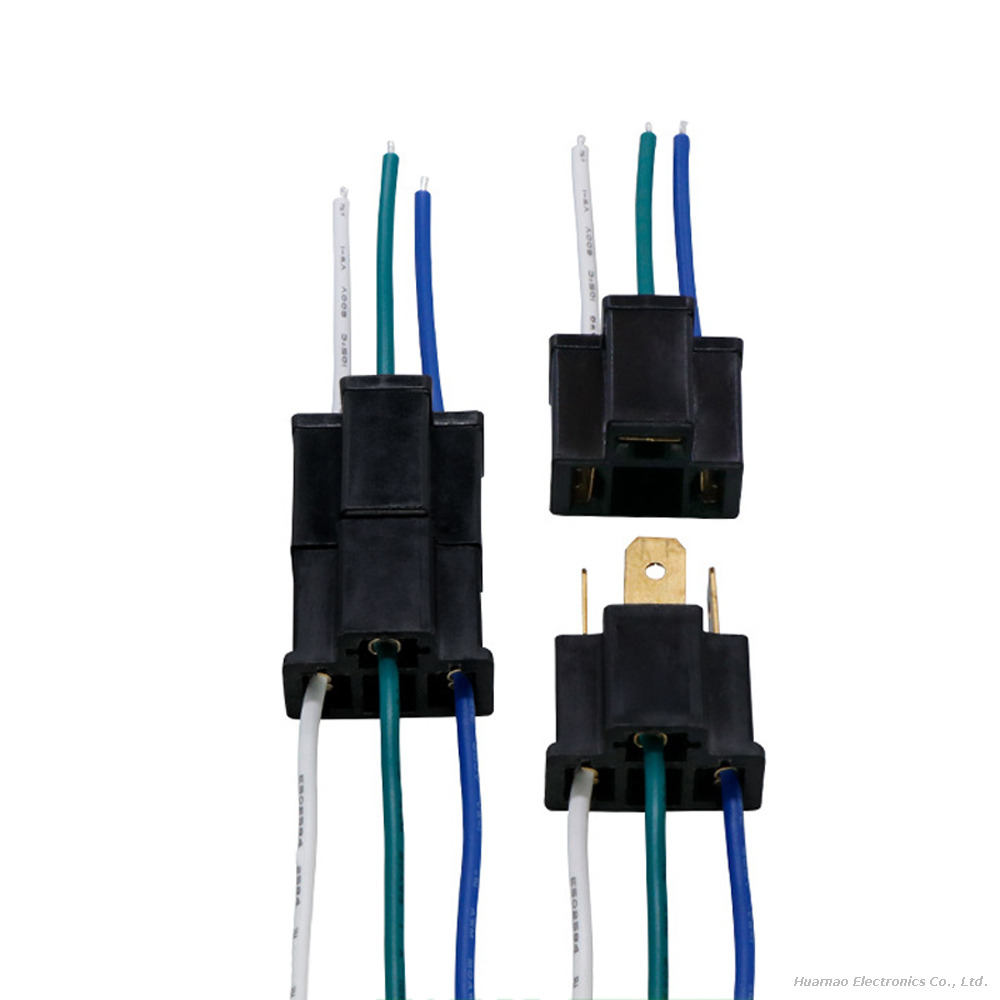
Material science dictates the lifespan of your harness. A custom automotive wire harness must survive extreme vibrations, chemical exposure, and temperature swings.
Engine compartments reach temperatures that melt standard commercial wiring. We utilize Tefzel or XLPE insulation for these zones. These materials maintain their dielectric strength even when exposed to oil, grease, and high ambient heat.
A bare wire bundle is vulnerable. We use different protection levels based on the zone:
● Corrugated Tubing: Best for heavy-duty protection against crushing.
● Braided Sleeving: Offers flexibility and superior abrasion resistance for tight bends.
● Heat Shrink: Ideal for sealing splices and providing localized strain relief.
For external sensors, we specify IP67 or IP69K rated connectors. These prevent pressurized water and dust from reaching the metal terminals, which would otherwise lead to rapid corrosion.
Material Type | Max Temp | Chemical Resistance | Best Use Case |
XLPE (Cross-linked) | 150°C | High | Engine Bay / High Load |
PVC (GPT) | 80°C | Moderate | Cabin / Lighting |
Tefzel (ETFE) | 200°C | Extreme | Turbo / Exhaust Sensors |
Electromagnetic Interference (EMI) is the "silent killer" of automotive performance. As we add more sensors, the risk of crosstalk between wires increases.
We use twisted-pair cabling for CAN bus and Ethernet signals. By twisting the wires, the electromagnetic fields cancel each other out. For high-frequency data like camera feeds, we add aluminum foil or tinned copper braiding as a shield to block external noise.
High-current wires, such as those powering electric steering motors, generate significant magnetic fields. We route these at least 50mm to 100mm away from low-voltage signal lines. If they must cross, we design them to cross at 90-degree angles to minimize the induction area.
Sometimes, internal shielding isn't enough. We may add ferrite beads to the harness near the ECU to suppress high-frequency noise. Proper 120-ohm termination resistors are also critical for CAN bus stability, preventing signal reflections that could corrupt data.
Note: When designing for EVs, ensure your signal wires are shielded against the high-frequency switching noise produced by the traction inverter.
Routing is where electrical engineering meets mechanical constraints. A custom automotive wire harness must be "packaged" into the vehicle's existing architecture without interfering with moving parts.
Wires break when they are bent too tightly. We follow the rule of thumb that the minimum bend radius should be at least 10 times the diameter of the harness bundle. We also design strain relief into the connectors to ensure the weight of the harness doesn't pull on the delicate metal pins.
Modern cars have very little "dead space." We use ultra-thin wall (UTW) wiring to reduce the overall bundle diameter by up to 20%. Multi-layer connector headers also allow us to consolidate multiple circuits into a single bulkhead penetration.
We avoid "monolithic" harnesses that run from the front bumper to the rear taillights. Instead, we break the system into modules (e.g., engine harness, dashboard harness, chassis harness) connected by inline plugs. This allows technicians to replace a damaged section without tearing apart the entire vehicle.
Before mass production, every custom automotive wire harness must pass rigorous testing. This is the "A" in EEAT—demonstrating the technical authority of the design through data.
We use automated "Cirris" or similar testers to check every circuit. These machines verify that Point A connects to Point B and, more importantly, that Point A is not accidentally shorted to any other point in the bundle.
A crimp that looks good can still fail. We perform destructive pull-tests on sample terminals to ensure they meet the Newton-force requirements specified by the terminal manufacturer. This guarantees the wire won't pull out during thousands of miles of road vibration.
We place prototypes in thermal chambers that cycle from -40°C to +125°C. This simulates years of winter starts and summer heat. If the insulation cracks or the connectors lose tension, the design must be revised.
Note: A "dry circuit" (very low current) requires gold-plated terminals because they don't develop the oxide layer that can block signals on standard tin-plated connectors.
Custom doesn't have to mean "expensive" if you design with manufacturing in mind. Reducing complexity during the design phase pays dividends during assembly.
For low-volume prototypes, manual crimping is fine. However, if your project scales, you must design for automated "cut-strip-terminate" (CST) machines. This means avoiding complex hand-soldered joints or non-standard heat shrinks that require manual labor.
We limit the number of different wire colors and connector families used in a single project. Buying 10,000 units of one connector type is significantly cheaper than buying 1,000 units of ten different types. Standardizing on a single family simplifies both tooling and inventory.
To minimize lead times, we provide manufacturers with clean DXF or HarnWare files. These digital formats can be imported directly into automated board layouts, reducing the human error associated with re-drawing schematics for the factory floor.
Strategy | Cost Impact | Complexity Impact |
Component Standardization | High Reduction | Lowers BOM count |
Modular Segments | Moderate Increase | Increases Serviceability |
Automated CST Design | High Reduction (at scale) | Simplifies Production |
Designing a custom automotive wire harness requires a perfect balance of electrical precision and mechanical endurance. By focusing on shielding and testing, engineers create systems that survive harsh environments. Professional solutions from wiringharnesscn ensure your project meets the highest safety standards. These high-quality harnesses prevent costly failures and guarantee long-term reliability for all vehicle electronics.
A: A custom automotive wire harness optimizes space and eliminates EMI issues that generic cables cannot handle.
A: Total the current draw of all components and size wires to prevent more than a 3% voltage drop.
A: Use XLPE for high-heat areas like engines and PVC for standard cabin electronics.
A: Engineers follow IPC/WHMA-A-620 and SAE standards to ensure safety and long-term reliability.
