


+86-13826948503 (Bella)
+86-18145725878 (Carven)

Author: Site Editor Publish Time: 2026-05-15 Origin: Site

Why do industry professionals use these terms interchangeably? Confusing a wire harness assembly vs cable assembly can quickly drain your budget or shorten product lifespans. In this article, you will learn to distinguish their distinct engineering roles to ensure your electrical systems perform optimally.
● Engineering Intent: A wire harness assembly is primarily designed for organization and geometric efficiency , whereas a cable assembly is engineered to provide rugged protection for internal components.
● Environmental Suitability: Wire harnesses are low-cost solutions best for protected, indoor environments , while cable assemblies are built for extreme circumstances like heavy industry or military use.
● Material Construction: Harnesses typically use simple thermoplastic or thermoset sheaths. In contrast, cable assemblies use heavy-duty materials like shrink-wrapped vinyl, rubber, or specialized fillers like Kevlar.
● Durability and Protection: Cable assemblies shield interior wires from heat, moisture, friction, and oxidation , hazards that a standard wire harness is generally unable to withstand.
● Cost vs. Performance: While a wire harness assembly vs cable assembly choice involves price, the decision should be driven by the application's physical stress to ensure long-term durability.
● Quality Standards: High-quality manufacturing involves rigorous prototyping, life lab testing, and UL certification to guarantee safety and design compliance.
The fundamental difference between these two components lies in their engineering intent. A wire harness assembly primarily organizes wires into a manageable bundle for ease of installation. In contrast, a cable assembly is engineered to protect the conductors from harsh external factors.
Wire harnesses act as a basic organizational tool. They keep electrical systems tidy and prevent "spaghetti wiring" within a chassis or cabinet. Cable assemblies serve a protective function. They are designed to withstand extreme environments where wires might otherwise fail.
A wire harness typically uses a simple exterior sheath made of low-cost thermoplastic or thermoset material. Cable assemblies utilize much more intensive exterior products. These often include heavy-duty shrink-wrapped thermoplastic, thermoplastic rubber, or vinyl to create a rugged barrier.
Harnesses are generally not built to resist constant friction or significant temperature swings. They are best suited for stable, indoor applications like residential wiring or protected industrial control systems. Cable assemblies are built for the "most extreme circumstances". They resist moisture, abrasion, heat, and compression.
The manufacturing process for a harness is often straightforward, involving basic terminals and bundling. This makes them a low-cost solution for high-volume, standard applications. Cable assemblies involve multi-stage layering and complex engineering to match the specific application. While the initial cost is higher, they prevent premature wear in demanding environments.
Feature | Wire Harness Assembly | Cable Assembly |
Primary Goal | Organization & Efficiency | Protection & Safety |
Outer Sheath | Light-weight (Thermoplastic) | Heavy-duty (Vinyl/Rubber) |
Cost | Low-cost solution | Premium/Higher investment |
Typical Environment | Protected/Indoor | Harsh/Outdoor/Industrial |
To understand the assembly, we must first distinguish between the wire and the cable. These terms are the building blocks of any electrical system.
A wire is a single strand of conductive material, typically copper or aluminum. It might be bare or covered with a thin layer of insulation, but it remains a single path for electricity.
A cable is formed when two or more wires are run together. They are often twisted, braided, or bonded and then contained within a protective outer sheath. Effectively, a cable is a unified piece of conductive equipment composed of multiple wires.
Choosing the right assembly starts with identifying the base component. If your project requires high-voltage power transmission, you might need a cable assembly that houses several large-gauge cables. If you are merely connecting a sensor to a board, a simple wire harness might suffice.
Note:When specifying your project, always clarify whether you need a bundle of individual wires (harness) or a ruggedized group of multi-conductor cables (assembly) to avoid procurement errors.
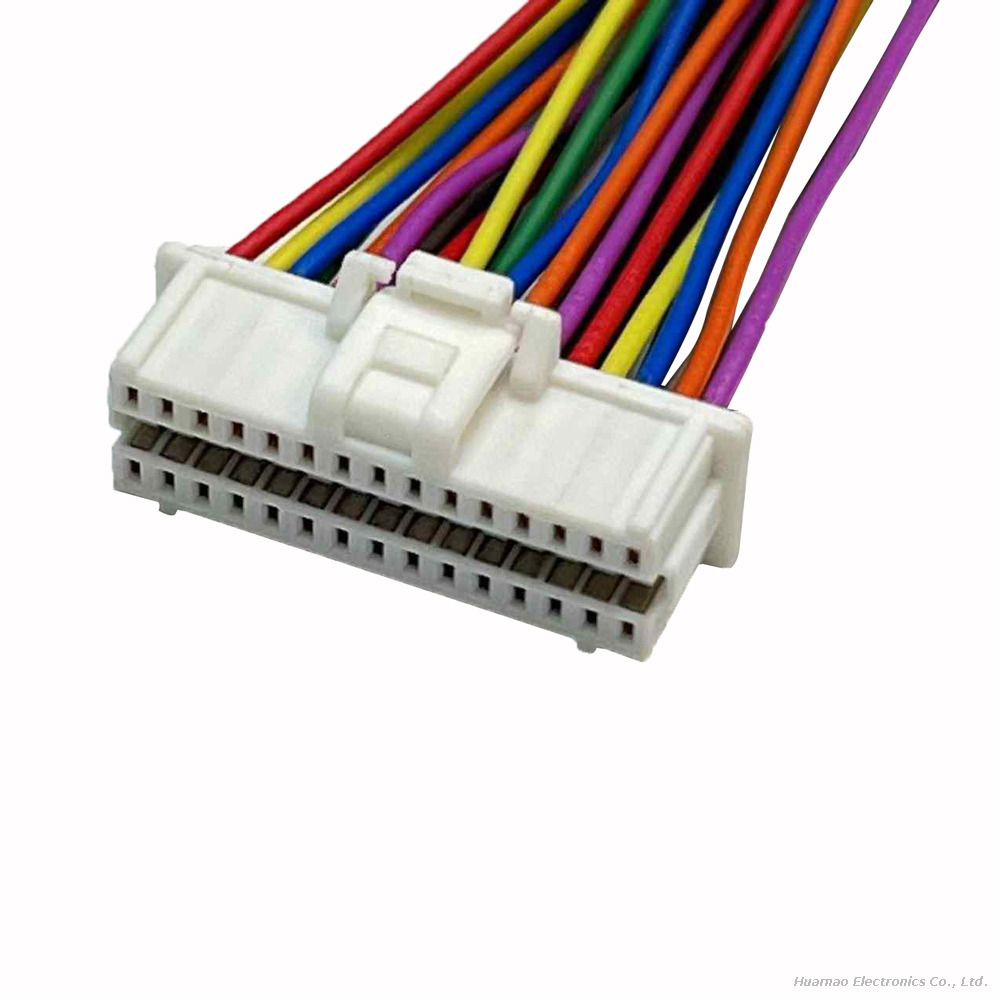
Wire harnesses are the unsung heroes of electrical organization. They solve two essential problems: geometric limitations and electrical requirements.
Manufacturers use basic sheaths to contain the components in an organized manner. Because the internal wires often already have their own protective insulation, the harness sheath acts as a secondary layer purely for management. This approach keeps the overall diameter small and the assembly flexible.
In complex systems, space is at a premium. Wiring harnesses provide the physical support system needed to fit many electrical paths into a very specific, confined space. They allow engineers to pre-route electrical paths, making final assembly much faster.
You will find harnesses in everything from commercial appliances to airplane engines. Their primary value is making a "multitude of different cables and wires" efficient and organized within a machine.
Note:Wire harnesses are sometimes called "wiring assemblies" or "cable harnesses," but they remain distinct from "cable assemblies" in terms of environmental protection.
Cable assemblies are engineered for the "punishing applications" experienced in heavy industry or by military personnel. They provide superior protection to their internal components.
Unlike the thin sheaths of a harness, cable assemblies use high-performance jackets. Materials like shrink-wrapped thermoplastic or heavy vinyl are applied to ensure the interior cables stay snug and safe. These jackets act as a final insulator and a hard shield against the world.
In demanding environments, electromagnetic interference (EMI) can ruin data signals. Cable assemblies often include specialized shielding layers to protect signal integrity. They also provide a barrier against oxidation and water ingress, which can corrode wires over time.
To handle mechanical stress, engineers add appropriate fillers to the assembly. Materials like Kevlar or nylon provide high tensile strength and prevent the cables from stretching or breaking under tension.
Choosing between a wire harness assembly vs cable assembly requires a thorough analysis of your application's operating conditions.
Ask where the product will live. Will it encounter water, extreme heat, or freezing temperatures? If the answer is yes, a cable assembly is likely required. If the environment is a controlled indoor cabinet, a wire harness is the more economical choice.
Evaluate the physical movement the assembly will endure. If the wires will face constant friction, vibration, or compression, the thin sheath of a harness will likely wear out prematurely. A cable assembly’s rugged jacket is designed specifically for these hazards.
While performance is key, budget matters. Wire harnesses are a "low-cost electrical solution". If your application doesn't demand extreme protection, spending the extra money on a complex cable assembly might be unnecessary.
Note:Prototyping is essential in the selection process to determine if different source materials are logistically and economically viable for your specific production run.
Quality manufacturing ensures that the assembly—whether simple or complex—performs safely in the field.
Before volume production, designs should undergo prototyping. This allows for multiple iterations and testing on automated machines. High-quality manufacturers use a "life lab" where components are subjected to real-world conditions to evaluate durability and safety.
Underwriters Laboratories (UL) is an independent service that tests products for adherence to design standards. Using UL-certified cables and manufacturing in a UL-approved facility ensures the assembly meets recognized safety protocols. It gives engineers confidence that the solution will be viable in the long term.
Complex designs require specific connectors, overmolds, and housings. Manufacturers with an extensive tooling inventory—sometimes thousands of distinct tools—can produce custom solutions more efficiently. If a specific tool doesn't exist, an in-house design team can often create it from scratch to meet the project's unique needs.
Choosing between a wire harness assembly vs cable assembly depends entirely on your specific environmental demands. Harnesses offer a low-cost, efficient way to organize wires within protected spaces. Conversely, cable assemblies provide the rugged protection necessary for extreme conditions. By partnering with wiringharnesscn, you gain access to expert engineering that matches designs to physical stresses. Their high-quality products ensure safety, durability, and long-term cost efficiency for every project.
A: A wire harness assembly organizes internal wires into a single bundle, while a cable assembly protects them from harsh external environments.
A: You should choose a cable assembly for demanding applications involving heat, friction, or moisture that would damage a standard harness.
A: Wire harnesses are a low-cost solution for simple organization, whereas cable assemblies require a higher investment for ruggedized protection.
A: Military projects typically require a cable assembly due to its heavy-duty materials and superior protection in extreme circumstances.
