


+86-13826948503 (Bella)
+86-18145725878 (Carven)

Author: Site Editor Publish Time: 2025-12-23 Origin: Site

In modern industries, industrial cable assemblies are essential for reliable power, stable signals, and system safety. Designing assemblies that meet standards requires careful material selection, smart design, environmental considerations, and thorough testing. Understanding these factors helps prevent failures, reduce downtime, and ensure long-term reliability in robotics, aerospace, EVs, and heavy machinery.
Industry standards exist to keep cable assemblies safe, reliable, and functional. They provide rules for materials, construction, testing, and labeling. Standards vary by region and industry.
UL Standards (US): UL 62, UL 758, UL 817. Focus on flexible cords, appliance wiring, and power supply cables.
BS 7671 (UK): Wiring regulations for safe electrical installations.
IEC Standards (Global): IEC 60204-1 and IEC 60320. Cover machinery wiring and appliance couplers.
IPC/WHMA-A-620: Worldwide standard for wire harness acceptability, crimping, soldering, labeling.
MIL-SPEC: Military and defense applications needing extreme durability.
Knowing which standards apply is the first step in creating compliant cable assemblies. They guide material selection, design choices, and testing methods.
Materials play a crucial role in the reliability, durability, and performance of industrial cable assemblies. Using high-quality conductors, insulation, and shielding not only improves electrical efficiency but also helps assemblies withstand harsh operating environments. The right materials also make it easier to meet industry standards and regulatory requirements.
The conductor is the heart of any industrial cable assembly. Its material affects conductivity, energy loss, and long-term reliability.
Copper: Excellent conductivity and corrosion resistance make it the standard choice for most industrial cable assemblies. It supports high-current applications and maintains stable performance over time.
Aluminum: Lightweight alternative for larger cables or applications where weight reduction is critical. Conductivity is lower than copper, so design adjustments are necessary.
Alloys: Used for specialized applications, such as EMI-sensitive environments, where additional shielding or signal integrity is required.
Insulation protects conductors from short circuits, mechanical wear, and environmental damage. It also influences flexibility and operating temperature range.
PVC: Cost-effective, suitable for standard industrial applications, but limited in high-temperature conditions.
PTFE/Teflon: High heat and chemical resistance, ideal for industrial cable assemblies exposed to extreme environments.
Silicone: Flexible, durable, and capable of withstanding repeated bending cycles, making it suitable for dynamic or robotic applications.
Shielding protects signal integrity in industrial cable assemblies by reducing electromagnetic interference (EMI). Connectors must also meet mechanical and environmental standards to ensure safe, reliable connections.
Braided or foil shields: Minimize EMI, crosstalk, and noise, critical in industrial automation or high-speed data systems.
Connectors: Must match environmental conditions, vibration requirements, and temperature ranges specific to the application.
Traceability ensures each component in an industrial cable assembly meets compliance requirements. Keeping supplier certificates, batch numbers, and inspection records helps during audits and prevents sourcing errors.
| Material | Conductivity (S/m) | Max Temp (°C) | Flexibility | Life Cycles |
|---|---|---|---|---|
| Copper | 5.8 ×10⁷ | 200 | High | 1,000,000 |
| Aluminum | 3.5 ×10⁷ | 150 | Medium | 500,000 |
| PTFE | N/A | 260 | Very High | 1,000,000 |
| PVC | N/A | 70 | Low | 100,000 |
| Silicone | N/A | 180 | High | 1,000,000 |
Choosing the right combination of conductors, insulation, shielding, and connectors ensures industrial cable assemblies perform reliably in demanding applications. Proper material selection reduces failures, enhances signal integrity, and simplifies compliance with industry standards.
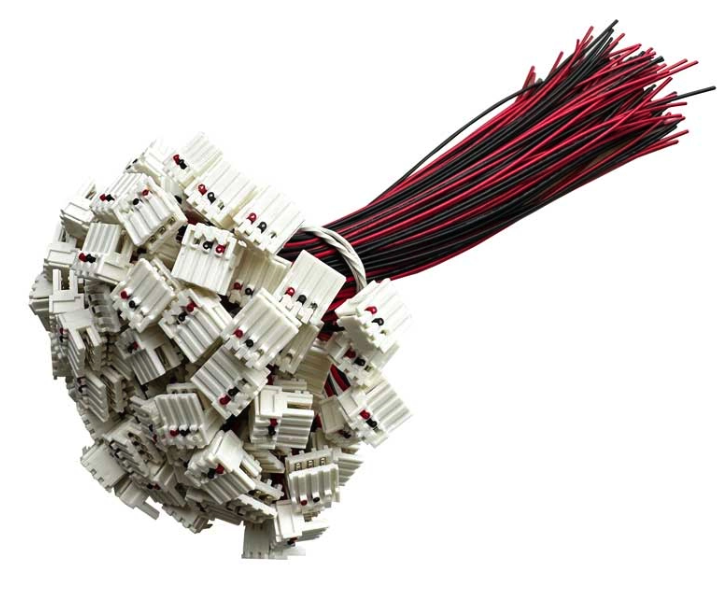
A well-thought-out design is the first step in preventing failures in industrial cable assemblies. The design must balance mechanical strength, electrical performance, and environmental durability. Even small design flaws can lead to signal loss, premature wear, or regulatory non-compliance.
Mechanical design focuses on the physical structure of the cable assembly. Strain relief is essential to prevent wires from breaking at connection points, especially in dynamic applications where cables bend or move frequently. Maintaining a proper bend radius avoids excessive stress on insulation and conductors, which could otherwise lead to cracking or failure.
Careful routing of cables ensures they do not interfere with moving parts, sharp edges, or other components, minimizing the risk of abrasion or accidental disconnection. In industrial cable assemblies, these mechanical considerations are critical for applications such as robotics, heavy machinery, and automated production lines, where consistent operation depends on the durability of every cable.
Electrical design ensures that signals and power are transmitted reliably throughout the cable assembly. Impedance matching across cables, connectors, and adapters is crucial to maintain signal integrity and prevent reflections that can degrade performance. Twisting pairs of wires within the assembly helps cancel out electromagnetic interference (EMI), while proper shielding—braided or foil—blocks external noise that could disrupt sensitive electronics.
Choosing high-quality conductors and precision connectors also reduces resistance and ensures efficient power delivery. For industrial cable assemblies used in control systems, communication networks, or data centers, sound electrical design directly affects the reliability and accuracy of the entire system.
Environmental factors have a significant impact on the lifespan and performance of cable assemblies. Temperature extremes, humidity, and exposure to chemicals or oils must be considered when selecting materials and protective layers. Outdoor industrial cables require UV-resistant jackets and chemical-resistant insulation to withstand prolonged exposure to sun, rain, and corrosive substances.
In specialized applications such as electric vehicle charging or aerospace systems, cable assemblies must endure vibration, thermal cycling, and harsh weather conditions without losing performance. Integrating these environmental considerations into the design phase ensures that industrial cable assemblies continue to function reliably under real-world conditions, reducing maintenance costs and operational downtime.
Even the highest-quality materials cannot guarantee performance if the assembly process is inconsistent. Controlled and documented manufacturing processes are essential to ensure industrial cable assemblies meet industry standards and regulatory requirements. Following precise procedures from start to finish helps maintain quality, reduces defects, and supports traceability during audits.
Crimping & Soldering: Using the correct tools and techniques is crucial for secure electrical connections. Poor crimping or soldering can cause intermittent connections, increased resistance, or complete failures. Regular calibration of crimping and soldering equipment ensures consistent results across batches.
Overmolding & Termination: Overmolding protects cables and connectors from mechanical strain, vibration, moisture, and environmental exposure. Proper termination techniques prevent conductor movement, maintain signal integrity, and extend the lifespan of the assembly. For industrial cable assemblies used in robotics or heavy machinery, overmolding can significantly reduce maintenance needs.
Technician Training: Skilled and certified technicians are vital for maintaining high-quality assemblies. Regular training helps staff follow best practices, avoid common errors, and understand the critical importance of compliance with standards such as IPC/WHMA-A-620, UL, or MIL-SPEC.
In-House vs Outsourcing: Partnering with certified manufacturers ensures that every step of production, from material inspection to final testing, is monitored for compliance. In-house production offers better control over processes and quality, while outsourcing requires careful evaluation of the supplier’s certifications, traceability records, and quality management systems.
Following structured procedures, maintaining accurate documentation, and calibrating tools regularly all help reduce errors and prevent failures. These practices ensure industrial cable assemblies deliver reliable performance in demanding environments and meet strict compliance requirements.
Testing is a critical step in ensuring that industrial cable assemblies meet performance standards and regulatory requirements. It confirms that assemblies function correctly under real-world conditions and helps prevent failures once they are deployed. A thorough validation process covers electrical, mechanical, and environmental aspects, and often includes third-party certification for additional assurance.
Electrical testing verifies that each cable assembly transmits power and signals reliably. Continuity checks confirm that conductors are properly connected, while insulation resistance tests ensure there is no leakage or short-circuit risk. High-pot or dielectric tests apply controlled voltage stress to detect weak points in insulation. Signal integrity and impedance verification are essential for data or communication cables, ensuring minimal signal loss and stable transmission. For industrial cable assemblies used in automation, telecom, or aerospace applications, electrical testing guarantees that systems operate safely and efficiently from the start.
Mechanical testing evaluates how cable assemblies withstand physical stress over time. Pull, flex, and torsion tests simulate real-world forces such as bending, stretching, or twisting that cables encounter during installation or operation. These tests reveal weaknesses in connectors, terminations, or insulation that could lead to failures. Industrial cable assemblies in heavy machinery or robotic systems especially benefit from mechanical testing, as it ensures that repeated movement or vibration will not compromise performance.
Environmental testing ensures that industrial cable assemblies can endure the conditions they will face in service. Cables are subjected to temperature extremes, humidity, UV exposure, and chemicals to verify their long-term durability. This type of testing is particularly important for outdoor applications, electric vehicle charging stations, or aerospace systems, where harsh conditions are the norm. By validating performance under realistic environmental stresses, manufacturers can ensure reliability and compliance with industry standards.
Third-party validation provides independent confirmation that industrial cable assemblies meet recognized safety and performance standards. Labs such as UL, TÜV, or Intertek perform comprehensive testing and certify compliance, offering additional confidence to clients. Proper documentation from these certifications supports audits, procurement contracts, or defense industry requirements, reducing risk and demonstrating that assemblies are built to exacting standards.
Many projects fail because small details are overlooked.
Missing Material Records: Without certificates, compliance claims are weak.
Mismatched Standards: Labels may claim UL or IPC compliance incorrectly.
Self-Certification Only: Lack of third-party testing increases risk.
Skipped Production Testing: Only supplier assurances, no performance verification.
Solutions: use certified suppliers, perform in-house and third-party testing, maintain documentation.


A: Materials affect durability, conductivity, and compliance. Copper is standard for high conductivity, aluminum is lightweight, and special alloys are used for EMI control. Insulation like PVC, PTFE, or silicone ensures heat resistance, flexibility, and chemical durability. Proper shielding and connectors protect signal integrity.
A: Design prevents failures and ensures performance. Mechanical design prevents wire breakage, proper bend radius avoids insulation stress, and routing reduces interference. Electrical design ensures impedance matching, twisted pairs reduce noise, and shielding blocks EMI. Environmental design accounts for temperature, moisture, UV, and chemicals.
A: Critical processes include crimping and soldering, overmolding and termination, skilled technician training, and choosing certified in-house or outsourcing manufacturers. Consistent procedures and calibrated tools reduce errors and maintain quality.
A: Testing includes electrical tests (continuity, insulation resistance, high-pot, signal integrity), mechanical tests (pull, flex, torsion), environmental tests (temperature, humidity, UV, chemicals), and often third-party validation from UL, TÜV, or Intertek labs.
Ensuring that industrial cable assemblies meet industry standards is a multi-step process. From choosing the right conductors and insulation, applying robust mechanical and electrical designs, to implementing controlled manufacturing processes and thorough testing, every step contributes to performance, safety, and reliability. Ignoring even small details can lead to failures, costly downtime, or compliance issues.
For companies and engineers looking for trusted solutions, Huamao Cable provides high-quality industrial cable assemblies that meet global standards. With expert design, certified manufacturing processes, and comprehensive testing, Huamao Cable ensures your systems remain efficient, safe, and reliable in any demanding industrial environment.
