


+86-13826948503 (Bella)
+86-18145725878 (Carven)

Author: Site Editor Publish Time: 2025-12-18 Origin: Site

A reliable cable assembly manufacturer focuses on more than delivery speed or cost. Consistent quality keeps systems stable and prevents unexpected failures. Cable assemblies may seem simple, but small variations can cause serious problems in real use. This article explains how manufacturers control design, materials, processes, and testing to ensure every cable assembly performs the same way, batch after batch.
Consistency means every cable assembly performs the same way, batch after batch, without unexpected variation. When quality stays stable, systems behave predictably in real-world use. It protects safety, supports long service life, and helps products meet regulatory and industry requirements.
In many applications, cable assemblies operate quietly in the background. When they fail, the impact appears suddenly. A single loose crimp or damaged insulation layer can interrupt signals, create heat buildup, or shut down an entire system. Consistent quality reduces these hidden risks before products ever reach the field.
Industries where consistent cable assembly quality is critical include:
Medical devices, where patient safety depends on uninterrupted power and signal integrity
Aerospace and defense, where cables must survive vibration, temperature extremes, and long service cycles
Industrial automation, where downtime directly affects productivity and revenue
Energy and power systems, where electrical reliability is essential for safe operation
When consistency breaks down, problems multiply quickly:
Intermittent electrical failures that are difficult to diagnose
Early insulation degradation caused by uneven extrusion or material defects
Connector pull-out, overheating, or arcing due to weak terminations
Costly recalls, warranty claims, and unplanned maintenance
Maintaining consistent cable assembly quality protects more than hardware. It safeguards system performance, customer trust, and brand reputation over the entire product lifecycle.
Cable assembly quality goes far beyond how a finished product looks on the outside. A clean appearance may suggest good workmanship, but true quality is defined by how the assembly performs electrically, mechanically, and environmentally over time. Reliable performance depends on many small details working together in a controlled way. Electrically, a high-quality cable assembly maintains stable resistance and signal integrity throughout its service life. Poor conductor preparation or inconsistent terminations can create resistance changes that lead to heat buildup, signal loss, or intermittent failures. These issues often remain hidden until the system is already in use.
Mechanical quality is just as important. Secure crimps and terminations prevent connectors from loosening under vibration or movement. Proper insulation thickness protects conductors from abrasion and electrical breakdown. Controlled bend radius and effective strain relief reduce stress on wires at connection points, where failures most often occur. Environmental performance completes the picture. Clean routing and clear labeling help prevent installation errors and simplify maintenance, while well-selected materials protect against temperature changes, moisture, chemicals, and long-term wear.
Visual inspection plays an important role in identifying obvious defects, but it only tells part of the story. Long-term reliability depends on consistent materials, precise processes, and controlled workmanship that support performance well beyond initial installation.
Although often grouped together, cable assemblies and wire harnesses differ.
| Aspect | Cable Assembly | Wire Harness |
|---|---|---|
| Outer protection | Unified jacket or sheath | Bundled wires |
| Environment | Harsh or exposed | Internal systems |
| Testing focus | Electrical + environmental | Routing + termination |
| Typical use | Industrial, outdoor, high-reliability | Automotive, appliances |
Because protection levels differ, quality controls also differ.
Consistency begins before production starts. Design choices lock in most cable assembly quality outcomes and define how stable production will be over time.
Manufacturers focus on:
Design for Manufacturability (DFM) to ensure assemblies can be built repeatedly using controlled, efficient processes
Connector compatibility so terminals, housings, and contacts fit correctly and maintain reliable electrical connections
Proper wire gauge selection to balance current capacity, flexibility, and thermal performance
Material matching to temperature and motion, especially for applications involving heat, vibration, or continuous flexing
Well-engineered designs reduce unnecessary complexity. Standardized layouts and components help limit variation between builds. Clear drawings, pin-out charts, and assembly notes guide technicians through each step. They reduce interpretation errors and help every cable assembly meet the same quality standard, from prototype to full production.
Raw materials define cable assembly performance from day one. Even the most controlled assembly process cannot compensate for poor material quality. For this reason, cable assembly manufacturers apply strict controls before materials ever reach the production floor.
Manufacturers rely on approved supplier lists to maintain consistency. ISO-certified material sources are preferred because they follow documented quality systems. For critical components such as copper conductors and insulation compounds, dual sourcing reduces supply risk while maintaining consistent performance.
Every material batch undergoes verification before use. Copper conductors are checked for electrical conductivity and surface condition to ensure low resistance and clean termination. Insulation compounds are inspected for moisture content, which can cause bubbles or weak spots during extrusion. Dimensional tolerances are also confirmed to prevent downstream process variation.
Each batch of material receives a unique identifier. This traceability links finished cable assemblies back to their raw materials, enabling fast root-cause analysis if issues arise in the field. It also supports compliance and long-term quality records.
| Material | Key Checks |
|---|---|
| Copper conductor | Diameter accuracy, oxidation level |
| Insulation compound | Moisture content, material consistency |
| Connectors | Plating quality, mechanical fit |
By controlling materials at the source, a cable assembly manufacturer protects electrical performance, mechanical integrity, and long-term reliability throughout the product lifecycle.
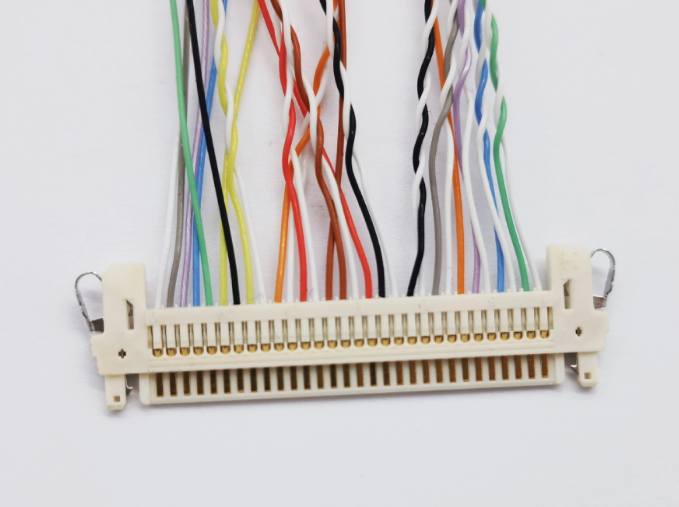
Stable processes create repeatable results. A controlled production flow helps every cable assembly perform the same, no matter the batch size. Clear work instructions guide each step. They keep operators aligned and reduce variation during shifts or job changes.
Automated equipment controls:
Length accuracy to maintain uniform fit
Strip depth to protect conductor strands
Insulation damage that can weaken performance
Machines receive regular checks. It keeps tolerances tight and scrap low.
Consistency depends on tooling and technique. Cable assembly manufacturers rely on validated crimp systems.
Manufacturers monitor:
Crimp height for electrical stability
Pull force to verify mechanical strength
Tool calibration cycles to prevent drift
Poor crimps cause resistance changes and heat buildup. They often lead to intermittent failures over time.
Harness boards and fixtures guide routing. They ensure repeatable wire paths and connector orientation. Proper strain relief protects termination points. It reduces stress from bending, vibration, and movement during use.
Every step follows documented instructions. They remove guesswork from cable assembly manufacturing and keep output stable. SOPs describe not only what to do, but how to do it. They define acceptable limits and visual examples.
SOPs typically cover:
Assembly sequence to maintain repeatability
Tool settings for cutting, stripping, and crimping
Inspection criteria at each control point
Handling rules to prevent damage or contamination
Revision control keeps everyone aligned. Old instructions disappear quickly, so teams always follow the latest process.
People still matter, even with automation. Training turns individual skill into consistent cable assembly results.
Cable assembly manufacturers use:
Structured onboarding for new operators
Task-specific certification tied to each process
Periodic requalification to prevent skill drift
They audit workmanship regularly. Feedback improves performance without blame and supports continuous improvement.
Inspection does not wait until the end. Quality checks appear throughout the entire cable assembly process.
It verifies readiness before mass production begins. FAI confirms the process matches design intent.
Checks include:
Electrical resistance within specification
Insulation thickness and coverage
Connector fit, alignment, and locking
Operators inspect during assembly. Issues appear early, not at shipment. IPQC reduces rework and protects production flow.
Final checks confirm compliance before delivery. They ensure each cable assembly meets customer and industry requirements.
| Test Type | Purpose |
|---|---|
| Continuity | Detect opens and shorts |
| Insulation resistance | Verify isolation |
| Pull test | Confirm mechanical strength |
Testing proves assemblies survive real conditions.
Common methods include:
Continuity and resistance testing
Hi-pot dielectric testing
Flex and vibration testing
Temperature cycling
Accelerated life testing predicts long-term behavior. Third-party labs sometimes verify results independently.
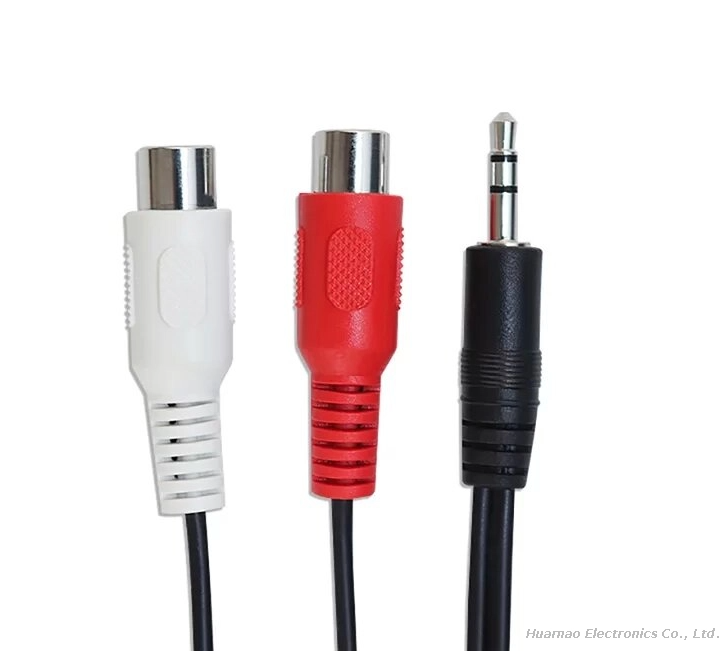
Automation reduces human variation. It improves repeatability, not quality alone. Stable equipment allows cable assembly processes to run the same way, shift after shift.
Automated cutting, stripping, and testing machines control critical variables. They hold length, force, and timing within narrow limits. This helps a cable assembly manufacturer manage volume without losing consistency. Automation works best when it supports operators. They still monitor results and respond to changes.
Machines drift over time. Maintenance keeps them predictable.
Manufacturers manage:
Preventive maintenance schedules for wear parts
Regular calibration of test equipment
Verification of fixture and jig accuracy
Well-maintained equipment reduces scrap and hidden defects.
Not all cable assemblies are high volume. Balanced automation supports frequent changeovers. Quick-change fixtures and programmable tools reduce setup errors. They keep small batches consistent and efficient.
A: Inconsistency often comes from uncontrolled materials, unclear work instructions, worn tools, or insufficient training. Small variations in crimp force, strip length, or routing can grow into performance issues over time.
A: They control design, materials, processes, and inspection together. Standardized drawings, approved suppliers, calibrated equipment, and repeat inspections help each batch perform the same way.
A: No. Visual checks catch obvious defects, but they cannot detect resistance changes, insulation weakness, or hidden termination issues. Electrical and mechanical testing are essential.
A: Traceability links finished cable assemblies back to raw materials. If a defect appears, manufacturers can identify affected batches quickly and prevent repeat issues.
Consistent cable assembly quality comes from controlled systems, not chance. A professional cable assembly manufacturer manages every detail, from design and materials to inspection and improvement. For projects that demand reliability and long service life, Huamao Cable provides cable assembly solutions built on stable processes and dependable quality.
