


+86-13826948503 (Bella)
+86-18145725878 (Carven)


Stripping wires one by one may seem like a small task, but in real production it slows assembly, increases handling time, and creates more room for inconsistency. That is why an IDC crimp connector is widely used in signal and compact wiring applications. Instead of requiring pre-stripped conductors, it allows termination directly through the insulation, helping manufacturers improve speed and keep contact performance stable. For customers looking for practical cable and connector solutions, Huamao Cable supplies products that support faster assembly, cleaner routing, and more reliable interconnection in compact systems.
IDC stands for insulation displacement contact. An IDC connector creates electrical contact by displacing the insulation around the wire instead of asking the assembler to strip it first. In plain terms, that means fewer preparation steps, quicker termination, and less manual variation during repeated production.
For buyers, the advantage is straightforward. When many wires must be connected efficiently and consistently, IDC helps simplify the process. It is especially useful in applications where speed, repeatability, and compact signal routing are more important than labor-intensive manual termination methods.
An IDC connector works because of three basic elements: the housing, the metal contact slot, and the mating interface. The housing keeps the wire aligned, the contact slot cuts through the insulation and grips the conductor, and the mating area allows the finished connector to join a board header or matching connector.
This is why IDC is valued for more than speed alone. The connection point is created in a controlled way, which helps improve consistency across repeated assemblies. In practical terms, that means neater results and a more stable process for cable and harness production.
The process is simple. First, the insulated wire is placed into the correct position. Then pressure is applied during termination. The metal contact cuts through the insulation and presses onto the conductor, creating the electrical path. Because the wire does not need to be stripped in advance, the workflow becomes faster and more organized.
This is especially helpful when multiple conductors must be terminated at once. In ribbon cable applications, for example, IDC technology can save significant labor compared with handling each conductor separately. That makes it attractive for compact electronics and internal system wiring where efficiency matters.
A fast connection is only useful if it remains stable over time. In many electrical systems, oxidation and intermittent contact can lead to signal problems and service issues. IDC technology is often appreciated because a properly designed termination creates a tight interface between conductor and contact area, helping reduce exposure to air and contamination.
That matters most in signal and low-power systems, where even small contact inconsistencies can affect performance. A good IDC connection supports both production efficiency and long-term reliability, which is why it remains a practical choice in compact electronic assemblies.
Connection method | Wire stripping needed | Assembly speed | Best fit | Main trade-off |
IDC connector | No | Fast | Ribbon cable, dense signal connections | Must match wire and connector design |
Crimp connector | Yes | Medium | Discrete wire harnesses | More prep work |
Soldered joint | Yes | Slow | Permanent manual assemblies | Lower assembly efficiency |
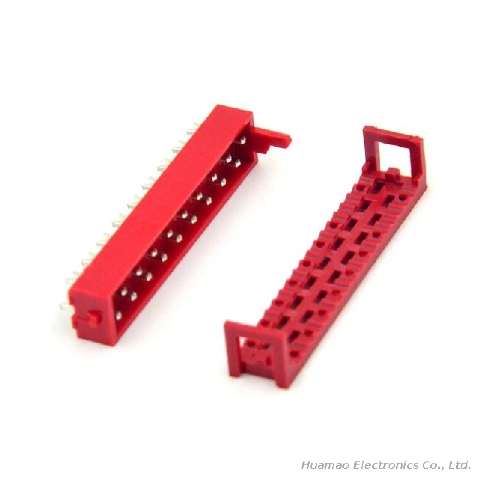
IDC connectors are closely linked to ribbon cable because they are highly effective when many parallel conductors must be terminated in one organized operation. Instead of treating each wire as a separate task, IDC supports faster multi-position termination with consistent alignment.
That makes it a strong option in communication equipment, internal machine wiring, compact electronics, and other applications where neat routing and efficient assembly are both important. For customers that need cleaner internal wiring without unnecessary labor, IDC is often a practical solution.
IDC solutions are also useful in compact wire-to-board connections. In control boards, embedded systems, and small electronic devices, available space is limited and signal routing must stay organized. A bulky or time-consuming connection method can create layout and assembly problems.
IDC helps by supporting compact interconnection and a more efficient build process. Buyers benefit not only from faster termination, but also from better cable organization and improved repeatability in production.
IDC connectors are commonly found in industrial modules, telecom hardware, compact controllers, and internal device interconnects. In these environments, designers often need a connection method that balances assembly efficiency with dependable long-term contact.
That is where Huamao Cable’s connector and cable assembly capabilities become relevant. Customers in industrial and embedded markets often need solutions that reduce assembly time while supporting compact product design, and IDC technology fits that need well when correctly specified.
Crimping and soldering are both useful connection methods, but IDC stands out when manufacturers want fewer steps and more repeatable assembly. Crimping usually requires wire stripping and terminal preparation. Soldering takes even more time and operator control. IDC reduces that extra handling by combining the contact process into the connector design itself.
For repeated production, that means cleaner workflow, less variability, and better assembly efficiency. This is one reason IDC is widely preferred for compact signal applications rather than slow manual builds.
IDC is not the right answer for every situation. The connector must match the wire size, insulation type, and intended application. If the cable and connector are not compatible, the termination may not perform as expected. IDC is usually most effective in controlled signal and low-power applications rather than every possible wiring environment.
Being clear about those limits makes the recommendation more trustworthy. When IDC fits the application, it offers real advantages. When another method is better, the system requirements should guide the choice.
After understanding the basic concept, buyers usually need to look at format details. Pitch affects density, pin count affects circuit capacity, and cable compatibility affects whether the termination will be stable in actual use. These are not small catalog details. They directly influence board layout, routing, and overall assembly efficiency.
A connector that seems acceptable at first may create problems if it does not fit the available space or cable structure. That is why practical IDC selection must consider both the connection method and the real design conditions.
Smaller-pitch IDC options are useful in dense electronic systems because they allow more connections in less space. A 1.27 mm IDC format is a good example. It supports compact board layouts and organized signal routing while keeping the core benefit of fast termination.
For embedded devices, compact controllers, and internal communication links, this kind of solution helps combine space efficiency with production convenience. Huamao Cable supports customers that need exactly this balance between compact design and dependable assembly performance.
An IDC connector is more than a connector style. It is a practical way to reduce wire preparation, improve assembly speed, and maintain stable contact in the right compact signal applications. For ribbon cable terminations, organized wire-to-board layouts, and dense internal interconnects, it offers clear advantages when properly matched to the cable and system design. Huamao Cable provides connector and cable solutions that help customers turn those advantages into real production value. If you are developing a compact signal system and need a dependable contact solution, contact us to learn more about the right idc connector for your project.
An IDC connector is mainly used for fast, repeatable wire termination in ribbon cable assemblies, compact signal connections, and internal electronic wiring.
No. That is one of its main advantages. The contact cuts through the insulation during termination, so the wire does not need to be stripped first.
They are commonly used in ribbon cable systems, compact wire-to-board connections, industrial modules, telecom hardware, and embedded electronic devices.
Pitch affects how many contacts can fit in a given space. Smaller-pitch IDC options are often better for dense signal routing and compact electronic layouts.
