


+86-13826948503 (Bella)
+86-18145725878 (Carven)

Author: Site Editor Publish Time: 2026-04-10 Origin: Site

Two connector types can both be mounted on a PCB and still serve very different purposes. A board to board connector is mainly used to connect one PCB directly to another inside a product, while a wire-to-board connector is used when a cable or harness needs to terminate on the board. That difference affects layout density, service access, wiring flexibility, and the overall product structure. For customers developing compact electronics, modular assemblies, and internal interconnect systems, Huamao Cable provides connector solutions for both dense PCB integration and practical cable-to-board connection.
A board-to-board connector is designed for direct PCB interconnection. Instead of using a separate cable, it lets one board mate with another board inside the device. This makes it a strong fit for compact products where internal space is limited and cable clutter needs to be reduced.
The benefit is not only electrical connection. It is also structural efficiency. In many products, direct PCB mating supports a cleaner internal layout and a more integrated module design. When engineers need stacked boards, parallel board placement, or compact internal architecture, board-to-board is often the more natural solution.
A wire-to-board connector does a different job. It brings a wire or cable harness onto the PCB instead of linking one board to another. This makes it useful for power input, sensor wiring, peripheral connection, and other cable-entry needs.
That is why wire-to-board remains important even in modern compact electronics. A product may have multiple internal boards, but it still needs a practical way to connect to the outside world through cables. In those cases, wire-to-board is the right interface.
Choosing board-to-board affects the internal product layout from the beginning. Pitch, stack height, and board spacing all influence how tightly the design can be packaged. This is why board-to-board selection is part of product architecture, not just component sourcing.
In compact devices, this matters a great deal. A well-matched board-to-board solution can help reduce overall size, improve internal organization, and support multi-board integration without adding wiring bulk. When miniaturization is a design goal, board-to-board often provides the cleaner path.
Wire-to-board decisions start from a different requirement. Once cables are involved, the focus shifts to routing flexibility, wire retention, and service access. The connector has to support how the harness approaches the board and how that cable will be handled during assembly and use.
This is why wire-to-board is often the better fit for external interfaces and flexible cable entry. Even a compact device with dense internal PCB architecture may still depend on wire-to-board for power, peripherals, or harness connection.
A board-to-board connection requires accurate alignment between two PCBs. If the board position, height, or mating tolerance is not controlled well, assembly can become difficult or unreliable. This is one of the major practical differences from wire-to-board, where the cable offers more flexibility.
For this reason, board-to-board design requires more attention to alignment early in development. Wire-to-board has mechanical concerns too, but they usually focus on cable retention and movement rather than direct PCB mating accuracy.
Comparison point | Board-to-board connector | Wire-to-board connector |
What it connects | PCB to PCB | Wire or cable to PCB |
Best strength | High density and compact layout | Flexible cable connection |
Typical location | Internal module interconnect | Board edge or external interface |
Service style | Less cable clutter | Easier cable replacement |
Common design concern | Alignment and stack height | Wire gauge and retention |
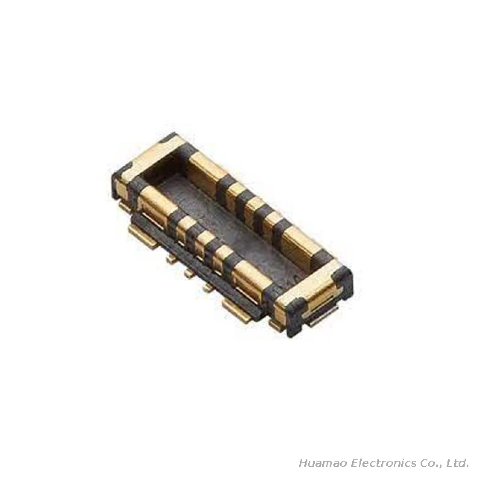
Board-to-board connectors are especially useful in compact electronic products that use more than one PCB in the same enclosure. This includes embedded devices, control modules, communication equipment, and other products where internal space is limited.
A board to board connector helps reduce cable clutter and supports a cleaner internal structure. Instead of routing wires between boards, the design stays more integrated and space-efficient. For multi-board products, that can improve both packaging and assembly.
The advantage becomes even clearer in fine-pitch designs. Smaller-pitch board-to-board formats allow more contacts in less space, which is important in compact electronics and industrial modules. This helps support thinner products and tighter layouts without increasing wiring complexity.
When the priority is high connection density inside a small enclosure, board-to-board is usually the stronger option.
Wire-to-board connectors are the better solution when the PCB must connect to external cables. Power leads, sensors, control wiring, and user-facing cable interfaces all require a cable-to-board path rather than direct PCB mating.
This makes wire-to-board especially valuable at the edge of the board or in products where flexible wiring is part of the design. It provides the connection between the PCB and the outside system.
Wire-to-board also has an advantage in serviceability. If a cable assembly may need to be removed or replaced later, a wire-to-board connection is often easier to access than a direct board-to-board structure. A technician can disconnect the harness without disturbing the internal PCB arrangement.
That makes wire-to-board a practical choice in products where maintenance and replacement matter as much as initial assembly.
A common design mistake is assuming that all PCB connectors are basically the same except for shape or size. In reality, a board-to-board connector and a wire-to-board connector serve different structural roles. One is for internal PCB integration. The other is for cable entry.
When that distinction is ignored, the result can be a product that is harder to assemble, less efficient internally, or more difficult to maintain. Connector role should always come before connector appearance.
Problems also happen when the connection is chosen only for basic fit without considering how the product will be assembled or serviced. If the device needs field maintenance, cable access matters. If the product faces vibration, retention matters. If multiple boards must mate in a tight enclosure, alignment matters.
Ignoring these points can create downstream issues in production and operation. The wrong architecture often costs more later than it saves at the beginning.
Imagine a compact device with a main control board and a smaller daughterboard for display, sensing, or communication. If the goal is to keep the product thin and organized, a fine-pitch board-to-board connector is usually the better choice. It allows the boards to connect directly without adding wire loops or extra bulk.
A 0.40 mm micro-pitch solution is a good example. It supports miniaturization, saves profile space, and helps fit more interconnection into a smaller layout. For dense internal modules, this kind of structure is often more effective than using wires between boards.
At the same time, the same device may still need wire-to-board at another location. The internal boards may use board-to-board, while the power cable, battery lead, or sensor harness still needs to connect through a wire-to-board interface.
This shows the real difference clearly. Board-to-board is best for compact internal PCB architecture, while wire-to-board is best for cable entry and flexible external wiring. In many products, both are necessary.
The real difference between these connector types is not just how they look, but what job they perform in the system. A board to board connector is the better fit for compact PCB-to-PCB design, dense internal layout, and multi-board integration, while wire-to-board is better for cable entry, external wiring, and easier service access. Huamao Cable supports both product directions for compact electronics, harness systems, and connector applications. If your design needs the right balance between internal density and cable flexibility, contact us to discuss the best micro-pitch board-to-board connector or wire-to-board solution for your project.
Board-to-board connects one PCB directly to another PCB, while wire-to-board connects a cable or harness to a PCB.
It is the better choice for compact electronics, multi-board modules, and dense internal designs where space saving matters.
It is better when the PCB needs power input, external wiring, sensor leads, or cable-based service access.
Yes. Many products use board-to-board for internal PCB interconnection and wire-to-board for external cable or harness connections.
